Amazon Drops Data Center Plans in Virginia
Following intense local opposition, the tech giant is converting a 122-acre Loudoun County site into housing and community facilities instead of AI infrastructure.
By Christopher Reed ·
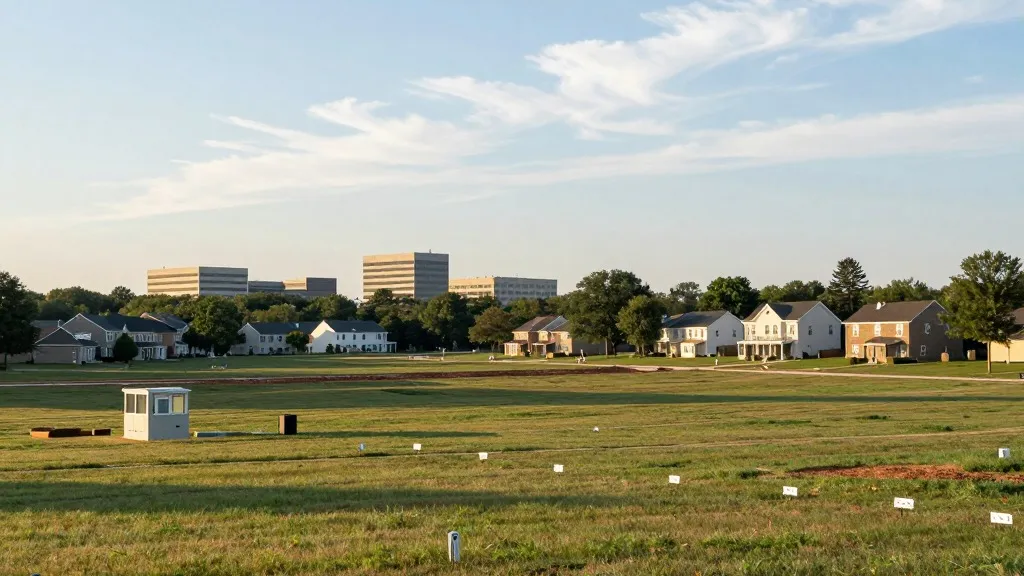
Amazon has officially withdrawn its proposal to construct four new data centers on a 122-acre parcel in Loudoun County, Northern Virginia. The decision marks a significant retreat from the company’s expansion strategy in the region, which is already known for having the highest density of data centers in the world. Instead of the planned computing facilities, the majority of the land, formerly part of the George Washington University campus, will be developed for mixed-use and residential purposes.
The reversal comes after months of friction between the company and local stakeholders. Amazon originally filed its application in July, but by September, the situation had reached a critical juncture. During a meeting with Phyllis J. Randall, the chair of the Loudoun County Board of Supervisors, the county indicated that it preferred an alternative use for the property over the proposed data center build-out. The local community had voiced strong objections, citing concerns over the noise generated by large-scale computing infrastructure and the substantial electrical load it would place on the regional grid.
As part of the new arrangement, Amazon will donate 25 acres of the property to the county. This land is earmarked for the construction of a community arts center and a new recreational facility. Additionally, the company has committed to contributing $5 million to the county’s housing fund, aiming to support the development of more attainable homes for working families. These concessions appear designed to address the primary grievances held by local residents regarding the impact of tech expansion on their daily lives.
Josh Weissman, Amazon’s vice president for data center development, explained the company’s reasoning in a statement. He noted that Amazon was eager to acquire the former university campus when the opportunity first presented itself. However, he acknowledged that the company carefully weighed the county’s “pointed concerns about data center development at this particular site.” Weissman admitted that while Amazon’s view of the property’s legal development potential differed from that of the county, they concluded that a shared vision was preferable to expensive legal battles.
The broader context of this decision reflects a growing tension between the insatiable demand for AI infrastructure and local capacity to host it. The surge in artificial intelligence applications has driven up the need for larger, more powerful facilities. This demand has created friction in communities worried about rising electricity prices, water usage, and environmental impacts. In response to these pressures, federal officials have also moved to adjust the landscape. Just days before this news emerged, President Donald Trump called on data center builders and AI hyperscalers to pay local communities a dividend to offset energy-related price increases.
The President further stated that data centers should be required to generate their own electricity and return or sell excess power back to the local grid. While these federal moves aim to streamline construction and mitigate costs, local dynamics often dictate the final outcome. In Loudoun County, the resolution highlights a shift toward negotiation rather than confrontation. County officials emphasized that choosing dialogue over reflexive disagreement created a viable opportunity for the community.
Phyllis J. Randall, the county board chair, stated that the agreement provides new spaces for residents to gather, create, and play. She highlighted the provision of more attainable housing for working families as a key benefit of the compromise. The outcome suggests that while the demand for AI computing remains high, local opposition and grid constraints are becoming decisive factors in where these facilities can ultimately be built.
The situation underscores a changing landscape for tech giants expanding in established suburban areas. While the original plan was to capitalize on the site’s potential for high-density computing, the final decision prioritizes residential and community needs. This pivot may influence how other technology companies approach similar developments in regions where local resistance is strong and energy infrastructure is under strain.
Source: Tom's Hardware